What Goes Into Emergency Board Up
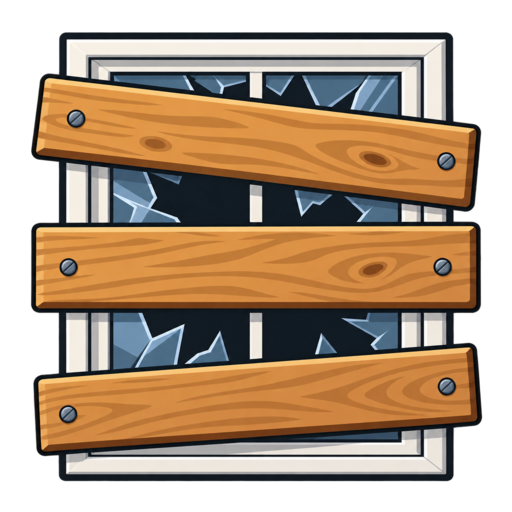
A broken window, a kicked-in door or a hole torn by a fallen limb leaves a building open to rain, wind, animals and anyone walking past. Emergency board up closes those openings with plywood panels fastened over or into the frame, turning a breach into a temporary wall until glass, doors or framing can be replaced. Insurers usually expect the owner to stop further damage, so a sealed opening also protects a claim. The panel has to bear on solid framing, shed water at the top edge and resist prying from outside. A sheet of cardboard or a tarp stapled across a broken pane keeps out a breeze for a night but tears in wind, leaks at the edges and does nothing against a pry bar. Loose glass left in the sash can fall later and cut someone.
Signs You Need Emergency Board Up
Shattered glass on the floor, a pane hanging in jagged pieces or a door frame splintered at the strike plate usually brings the first call. Openings on the ground floor or facing weather matter most, since rain soaks drywall and insulation within hours and an open window invites a second break-in.
- Window or sliding glass door broken by a storm, ball or burglar
- Entry door forced open with the jamb split or lock torn out
- Hole in a wall or roof left by a fallen tree limb
- Vehicle crashed into a storefront or garage wall
- Openings left after a fire, with glass blown out by heat
- Vacant property with windows already cracked or missing
Our Emergency Board Up Process
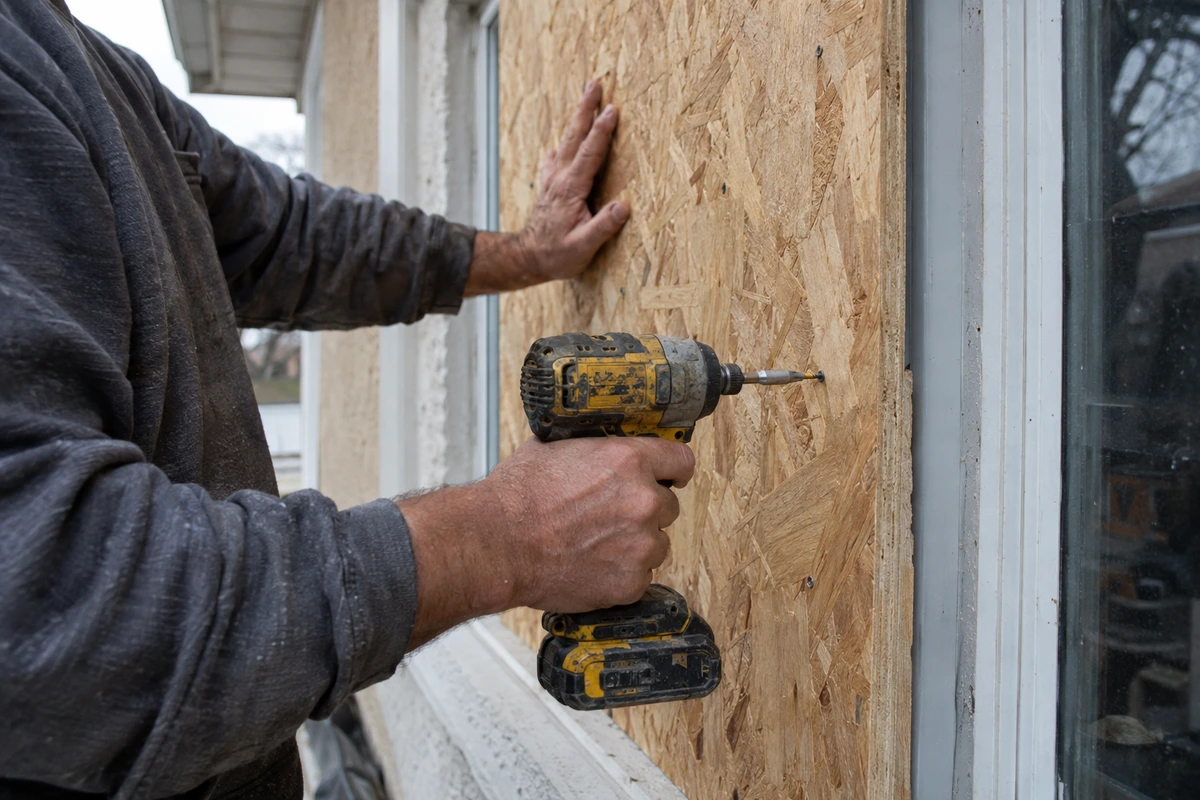
A tape measure across the rough opening, frame to frame, tells the crew what sheet size to cut and whether the panel can sit inside the casing or must lap over the trim onto siding or brick. Before any cutting, loose shards get pulled from the sash by hand with cut-resistant gloves, and broken glass on the floor and sill is swept and bagged. We check the frame for rot or splitting, since screws only hold where the wood is sound. Plywood gets ripped to size on a circular saw at the truck, usually with an inch or two of overlap past the opening on each side. Panels go up with screws driven into studs or the window buck every 12 inches or so around the perimeter; on masonry, holes are drilled first for anchors. For doors that still need use, a hinged panel with a hasp and padlock is set. Gaps along the top edge get caulked or covered with flashing tape so rain runs off. We finish by pushing on every panel to feel for flex and photographing each opening for the insurance file.
Tools and Materials for Emergency Board Up
Exterior-grade plywood, typically 1/2 to 3/4 inch thick, is the standard panel because it stands up to rain for months, while interior particleboard swells and crumbles once wet. Coated construction screws are chosen over nails since they pull the panel tight, resist being pried out and back out cleanly when the board comes off. Concrete screws or sleeve anchors set with a hammer drill hold panels on brick or block, where wood fasteners would just spin. On large openings or panels set inside the frame, 2x4 lumber strongbacks run across the back and bolt through, stiffening the sheet so it can't be kicked in. A cordless impact driver sinks dozens of screws quickly without stripping heads. Heavy plastic sheeting goes behind the plywood when interior finishes need an extra barrier against blowing rain.
Can You Do Emergency Board Up Yourself?
The ground-floor window side of the job is homeowner work; the high, structural or fire-damaged side is not. Someone with a circular saw, a drill and a sheet of exterior plywood can cover a single low window, provided the glass is cleared with heavy gloves and eye protection. The line comes at anything requiring a ladder above the first story, openings wider than a full 4x8 sheet, roof holes and walls where a car or tree has cracked framing, since that structure may not carry a panel safely. Fire scenes need clearance from the fire department first, and sagging ceilings or exposed wiring call for a licensed electrician or contractor before anyone works nearby.
Factors That Change an Emergency Board Up Job
Covering one cracked ground-floor bedroom window takes a single sheet, while sealing a burned-out storefront means dozens of panels, bracing and ladder or lift work. Damage to the surrounding framing is what separates a quick panel from a rebuilt opening.
- Number of openings and how many full plywood sheets they need
- Height of the opening and whether ladders or a lift are required
- Wall material, such as wood siding, brick, stucco or block
- Rotted, split or burned framing that won't hold fasteners
- Amount of broken glass and debris inside and outside
- Whether a door panel must stay operable with a lock
How Long Does Emergency Board Up Take and Last?
A typical emergency board up job runs about one to two hours, for a house with one to three broken windows or a forced door. Large storefronts, multi-story buildings, masonry that needs drilling and fire-damaged structures usually stretch the work to half a day or longer, and nighttime calls in a storm slow every step. Properly fastened exterior plywood generally holds for several weeks to a few months, long enough for glass to be ordered and insurance to settle. Boards left up past six months or so on a vacant property tend to weather, delaminate at the edges and need refastening or replacing.
Upkeep and Next Steps After Emergency Board Up
Walking the boarded openings after every heavy storm, and at least weekly on vacant buildings, matters most, checking for loose screws, lifted corners and water staining below the panel. Plywood that flexes or shows wet edges should be tightened or swapped before leaks reach the wall cavity.
- Reseal the top edge with caulk or flashing tape when it lifts
- Have a glazier measure and replace the broken glass promptly
- Bring in a carpenter to rebuild split jambs and rotted sills
- Call a water mitigation crew when drywall or insulation got soaked
- Patch screw holes in trim or siding once the boards come down
How Much Does Emergency Board Up Cost in Prairie City, IA?
Emergency board up in Prairie City, IA typically costs between $267 and $2,303, with a single ground-floor window at the low end and a burned-out storefront or multi-story building at the top. Pricing depends mostly on how many full sheets of exterior plywood the openings need, whether the crew has to work off ladders or a lift, and whether brick or block means drilling for anchors instead of screwing into wood framing. After-hours storm calls, heavy glass cleanup and split jambs that need strongbacks add labor to the bill.